
DUBAI · 2026 MARKET ANALYSIS
How Dubai Real Estate Weathered the 2026 Regional Test — And What It Means for Turkish Investors
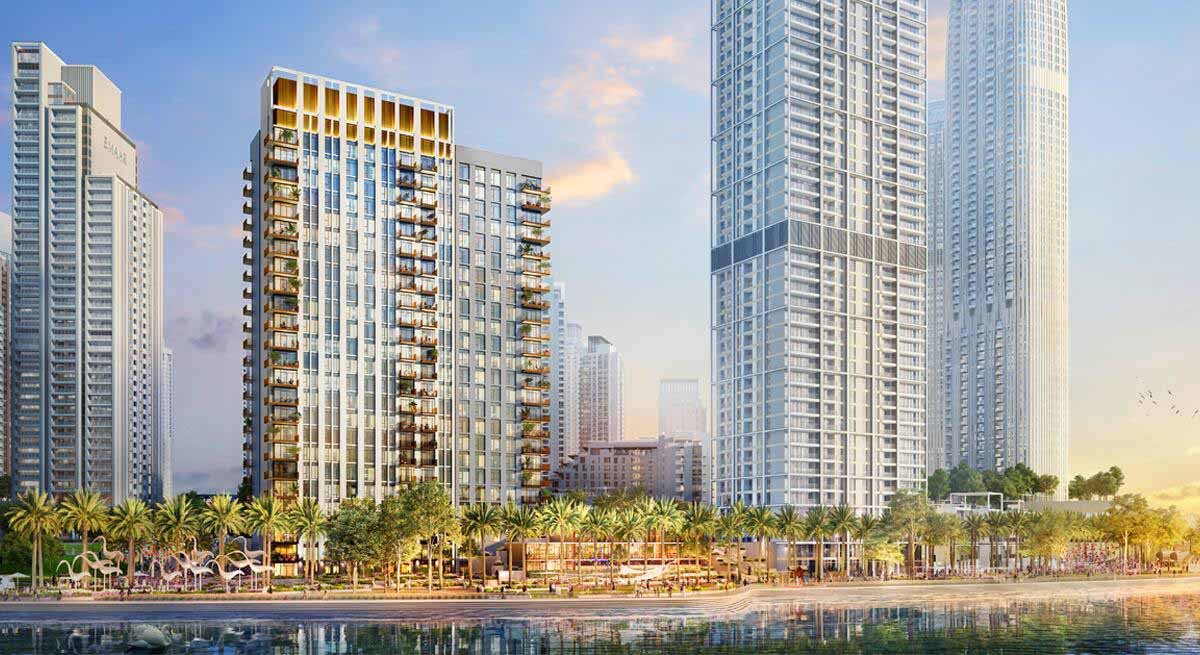
How Dubai Real Estate Weathered the 2026 Regional Test
In the first half of 2026 the region went through an escalation that began in late February and eased into a fragile ceasefire in early April; the UAE was among the parties affected. As of June 2026 that ceasefire holds, but remains fragile. Against this backdrop, Dubai real estate told a two-part story. The first quarter — largely before the late-February escalation — was exceptionally strong: total transactions reached AED 252 billion, up 31% year-on-year, with foreign investment at AED 148.35 billion (+26%), according to the Dubai Land Department (9 April 2026). Residential value alone hit AED 176.7 billion, up 23.4% (Gulf News).
By Avla Gayrimenkul A.Ş. · Last updated: 13 June 2026
Quick Look
- Q1 2026 (mostly pre-escalation) was very strong: AED 252bn in transactions, +31% YoY.
- The escalation period brought a clear softening: UAE transactions in the first 12 days of March fell about 37% YoY (Goldman Sachs, via Fortune).
- Residential prices eased month-on-month (March -5.9%, April -1.9%, May -1.2%, ValuStrat) — but annual capital value stayed positive at +2.5%.
- The slowing decline in May reads as an early sign of stabilisation, not full recovery.
- For Turkish investors: zero income, capital-gains and property tax; a 10-year Golden Visa threshold of AED 2 million (~USD 545,000).
| Period | Data | Direction |
|---|---|---|
| Q1 2026 (pre-escalation) | AED 252bn transactions, +31% YoY | Strong ▲ |
| March–May 2026 | Prices -5.9% / -1.9% / -1.2% MoM | Softening ▼ |
| May 2026 | Decline slowing; annual value still +2.5% | Stabilising → |
01What happened
A regional escalation began in late February 2026 and eased into a fragile ceasefire by early April. The UAE was among the parties affected, so this was not a market watching events from a safe distance — it felt the impact directly. The effect on real estate, however, was concentrated and time-limited rather than structural: activity slowed and pricing softened for roughly three months. We deliberately separate the two periods below, because blending them would misread a strong pre-escalation quarter as post-conflict resilience.
02How the market reacted
A measured dip, then early stabilisation
During the escalation, UAE transactions in the first 12 days of March fell about 37% year-on-year (Goldman Sachs, via Fortune). Residential prices eased for three consecutive months — March -5.9%, April -1.9%, May -1.2% (ValuStrat). Yet two facts matter for context: annual capital value remained positive at +2.5%, and the decline clearly decelerated into May, which analysts read as an early stabilisation signal rather than a turnaround. Sellers offered concessions of around AED 2.36 billion across roughly 3,292 properties — a sign of negotiation, not a collapse.
Villas proved more resilient than apartments: down just 1.4% month-on-month in May but up around 5% since the start of the year, led by communities such as Jumeirah Islands and Meadows. The prime segment held firmest of all — even during the escalation, record deals continued, including an AED 422 million Jumeirah Peninsula residence in March 2026.
03The safe-haven thesis: with nuance
Dubai is often described as an untouchable safe haven — and the 2026 data does not support that framing. The market dipped, and pricing pressure was real. The more accurate read is one of resilience under stress: the dip stayed shallow, annual figures held positive, and stabilisation appeared within months. Historically, previous geopolitical shocks have tended to delay the timing of transactions temporarily rather than push prices down permanently (analyst view). The investor question, therefore, shifts from 'is Dubai immune?' to 'how fast does it recover?' — and 2026 suggests the answer is: relatively fast.
Long-term confidence signals stayed intact through the period. An established developer's founder noted that capital inflows remained stable and off-plan collections healthy, and on 11 June 2026 an established developer announced a AED 200 billion mega-project — a long-horizon vote of confidence. The counterweight to watch is supply: roughly 65,000 apartments and 12,500 villas are expected by year-end, a wave that could temper price growth.
04What it means for Turkish investors
For a Turkish buyer, the appeal of Dubai is structural and survives a soft quarter. There is no income tax, no capital-gains tax and no property tax. The 10-year Golden Visa threshold via real estate is AED 2 million (around USD 545,000), and in Q1 2026 some 4,218 residencies were granted through property — up 34.7% year-on-year. According to industry estimates (not official DLD figures), Turkish buyers account for roughly 3–4% of the foreign market, a share that is rising.
On price expectations for 2026, sensible forecasting means a range, not a single number. Knight Frank projects prime growth of +3–5%; Cushman & Wakefield sees +5–8%; Fitch, by contrast, warns of a possible 10–15% correction risk driven by incoming supply. The takeaway for Turkish investors: the early-2026 softening was a window of negotiation rather than a reason to stay away — but it should be entered with the supply wave and the wide forecast range firmly in view, and individual record deals should not be read as the general trend.
Avla · your partner abroad
Thinking about Dubai? Let's talk through the nuance together.
+90 532 282 2657 · realestate@avla.com.tr · Şifa Sokak No:19, Caferağa Mah., Kadıköy 34710, İstanbul · https://wa.me/905322822657

A senior economist, graduate of Université Paris 1 Panthéon-Sorbonne, and a graduate of Istanbul University Business Administration with 33 years in business; founder of Avla Real Estate. He reads every selection and every agreement himself.
Founder profile →

